

Hear from YAA Administrator, Olivia who has put together this blog to highlight the support available for adopters, parents and their children, and how to access it.
Financial help if you have children in the UK
Child Tax Credit is a benefit that helps with the costs of raising a child if you’re on a low income. It’s being replaced by Universal Credit, so most people who need help with these costs now have to make a claim for Universal Credit instead.
What is Universal Credit? Universal Credit is a payment to help with your living costs. It’s paid monthly – or twice a month for some people in Scotland. You may be able to get it if you’re on a low income, out of work or you cannot work.
Child Benefit is a separate benefit paid directly to one parent every 4 weeks. You get Child Benefit if you’re responsible for bringing up a child who is:
- under 16
- under 20 if they stay in approved education or training
Only one person can get Child Benefit for a child. There’s no limit to how many children you can claim for. By claiming Child Benefit, you can collect National Insurance Credits which count toward your State Pension.
Read more about financial help as a parent here
Adoption and Special Guardianship Support Fund (ASGSF) Previously known as the Adoption Support Fund, this provides funds to local authorities and regional adoption agencies (RAAs) to pay for essential therapeutic services for eligible adoptive, special guardianship order (SGO) and child arrangement order (CAO) families.
The ASGSF will continue to offer support, up to March 2025.

Help and support for parents and adopters
Support for children in education
As a parent, this can sometimes be a challenge. Every child is different, as are the people involved in gathering enough information to make a referral but if there are any concerns for your child regarding Special Educational Needs (SEN), support can be applied for either by;
speaking to your GP
OR
if your child is of nursery / school age, any concerns can be discussed with them, and they are able to make a referral.
Generally, once a referral has been made, you will receive an appointment at your local hospital. The child’s Consultant will then decide whether or not to put a child forward for an assessment. This will then put a child on the General Developmental Assessment Pathway (GDA Pathway) waiting list.
Once at the top of the list, the Child and Adolescent Mental Health Services (CAMHS) will make an appointment to see you and your child and will explain the next steps.
An assessment will be done based on what the professional at CAMHS believes a child’s needs could be, for example; Attention Deficit Hyperactivity Disorder (ADHD), or Autism Spectrum Disorder (ASD).
Following the assessment, a report will be completed, discussed and shared with all appropriate parties such as the GP, school or nursery and parents/carers.
The assessment waiting list can be long, therefore speaking with your child’s school or nursery to organise an SEN plan is beneficial. This can also support evidence towards a diagnosis.
Following a diagnosis, depending on the severity of your child’s needs, an Educational Health Care Plan (EHCP) can be applied for from your local authority. This can also be a challenging process however, working with the professionals involved in getting your child’s initial diagnosis will provide the local authority with the evidence they need to grant the EHCP.
Pupil premium: overview – GOV.UK is financial support to improve educational outcomes for disadvantaged children in state funded schools in England.
Parents and Carers request access to this, through the child’s school and it is the decision of the school how the money is spent. In the case of an adopted child, the adopters would need to inform the school of their child’s former ‘looked after child’ status.
Schools must show how they are using their Pupil Premium effectively and will publish these details on their website.
Disability Living Allowance (DLA) is also available for those that need it. This can be applied for by anyone, providing they have a medical condition.
Read more about extra help for children who have Special Educational Needs and disabilities.
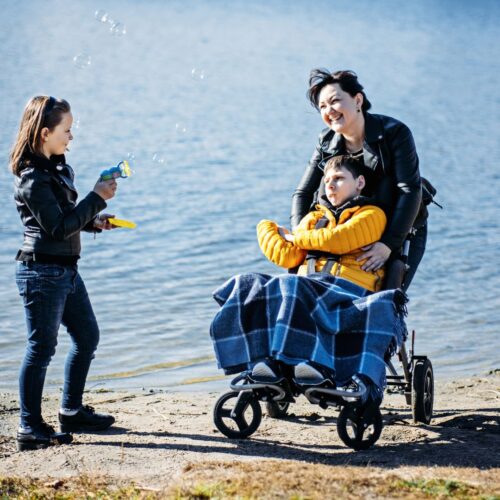
help and support for parents of children with disabilities
Special Education Needs and Disabilities Information Advice and Support Service (SENDIASS)
SENDIASS are a group that will offer FREE, impartial and confidential advice and information to young people, parents and carers about special education needs and disabilities. There is a SENDIASS team within every local authority.
For help and advice on lots of different things as a parent, you can read more from the NHS
Other Support and Advice
We Are Family offer free mutual support, information and inspiration to adopters and those considering adoption through:
- Parent-Led Social and Support Groups
- Volunteering Opportunities and Bespoke Training
- Our Member Hub, featuring WAF Talks and other Resources
- ‘Adoption Shared’ Podcast
- Blog & News
Family Lives offers a confidential and free* helpline service for all families in England and Wales (previously known as Parentline). Help is available for emotional support, information, advice and guidance on any aspect of parenting and family life.
Family Line offer free emotional support, information and guidance on family relationships – including siblings – conflict, parenting, caring, financial worries and more.